Game Changer
 Scholarship Support Helps Athlete-Turned-Athletic Trainer Care for the Next Generation
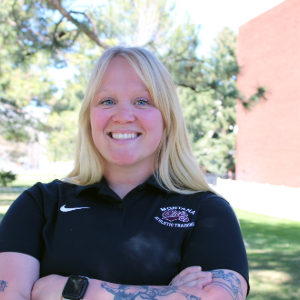
Jane Handrick’s love of athletic training found its roots in her own hardship.
Growing up in Colorado, Handrick was an avid lacrosse player with aspirations to pursue the sport in college. When she was diagnosed with a spinal disease as a high school sophomore, it didn’t just represent a significant physical setback — it meant losing her dream.
“Lacrosse was my passion. It was my everything ...,” Handrick said. “I had to stop playing lacrosse and it tore my world apart.”
One of the people Handrick credits with helping her rebuild and refocus after her diagnosis was her high school’s athletic trainer, who she said was, “by my side the whole time.”
A few years later, as she considered her own educational future, Handrick asked the athletic trainer how she’d feel if Handrick followed in her footsteps.
The athletic trainer’s response?
“You were born for this.”
Fast-forward to today and Handrick is working toward earning a master’s degree in the University of Montana’s intensive athletic training graduate program, through the College of Health's School of Integrative Physiology and Athletic Training. In 2026, she was honored with the Naseby and Evelyn Rhinehart Athletic Training Scholarship, an award named for UM’s legendary first head athletic trainer and his wife.
The University’s athletic training program, which was among the first of its kind in the nation, helps prepare the healthcare professionals of tomorrow to prevent, diagnose and treat injury and illness in athletes.
“I think it is one of the coolest professions because I get to be a part of a team in a different way,” Handrick said. “The program here has done an amazing job preparing me both in class and then every single day we're learning hands-on material.” 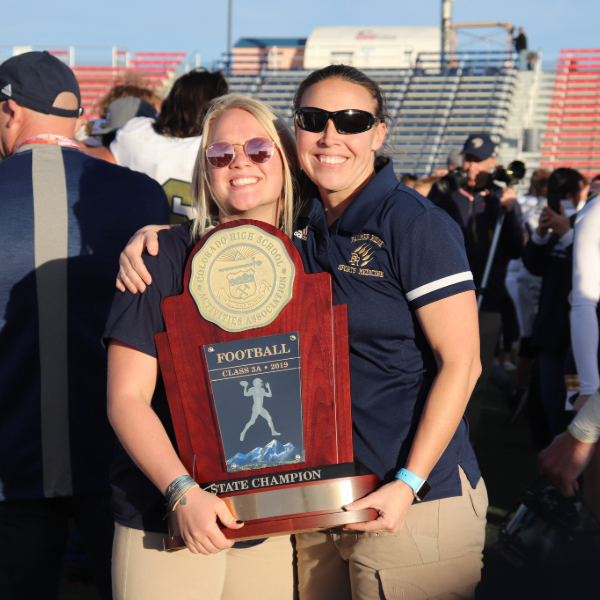 After spending spring semester of 2026 working primarily with the Grizzly football team, Handrick is inspired to use her ongoing education and training, along with her own personal experience, to help guide student-athletes from injury to rehabilitation to an eventual safe and successful return to play.
“Being injured and being taken out of something that you love so deeply and is such a big part of your life, it can really flip your world upside down,” she said. “So being able to help these student-athletes make sure they're at their best when they get back on the field — that’s really rewarding.”
The graduate program’s rigorous curriculum means Handrick navigates a full class load as well as 30-40 hours of clinical rotations each week. Coupled with working many weekends at Grizzly sporting events, she admitted the schedule can be taxing. When she does have limited time off, it's usually spent studying, often late into the night.
While pursuing her undergraduate degree, Handrick said she was able to work her way through school, but the increased demands of graduate school would make that much more difficult.
That’s part of what makes the scholarship support she has received at UM so indispensable, Handrick said.
With the support provided through the Naseby and Evelyn Rhinehart Athletic Training Scholarship, Handrick said she can balance her studies and clinical rotations with time to rest and recuperate. That ultimately allows her to serve others to the best of her ability.
“Having that little bit of time to recharge, I get to show up better for the athletes,” she said.
Support for graduate fellowships continues to be a high priority for donors to the UM Foundation. These investments are a powerful way to strengthen the University’s ability to attract and retain exceptional and accomplished scholars, helping reduce financial barriers and allowing them to pursue advanced degrees while making significant contributions to research, teaching and community engagement.
Yet graduate fellowship support goes far beyond empowering students to focus on academics. It also helps students like Handrick care for their own mental and physical health, avoiding burnout and supporting their overall wellness as they put in long hours in the classroom and receiving hands-on training in the field.
In part due to that donor support, Handrick is now able to provide others with the kind of care she once needed, continuing a journey inspired when her own athletic trainer helped her turn a devastating loss into a future career.
“Because of donors, a lot of students get to pursue dreams that they might not have been able to pursue,” Handrick said. “Every day, I wake up and I love what I do.”